How to Redesign Your Living Room Using ChatGPT and AI — The Complete Practical Guide
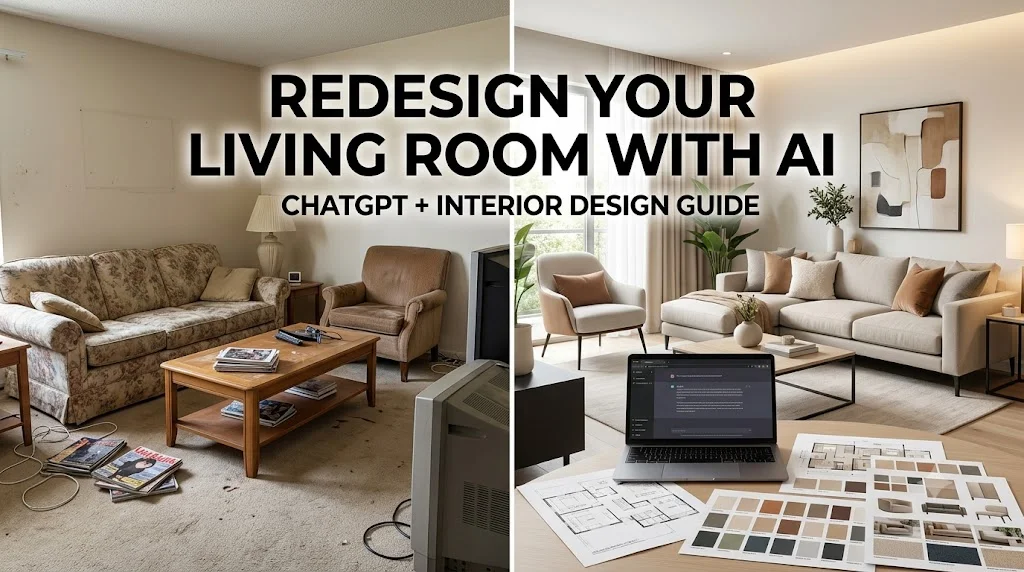
My living room has been the same for seven years. Not intentionally. It just… happened. I moved into this house, set up the furniture in a way that made sense, and then never changed it. Every time I thought about redesigning it, I would get overwhelmed. Where do I even start? What style should I go for? What colors work together? Should I keep the sofa or replace it? How much is this going to cost? The overwhelm was so real that I just left everything as it was.
Two months ago I decided to actually do something about it. Not by hiring a designer — that felt too expensive and too much pressure. But by using ChatGPT as a collaborative design partner. I used it to figure out my style, create a cohesive color palette, plan the space, find specific items, and create a budget. The entire process took maybe ten hours over two weeks. And the result is a living room I genuinely love.

The best part: I did not have to throw everything away and start from scratch. I kept the good pieces and reimagined the space around them. I stayed on budget. I made decisions based on data instead of guessing. And I learned that ChatGPT is genuinely one of the most useful tools for interior design because it is patient, thorough, and understands constraints in a way that even many design professionals do not.
This is not about using AI to generate perfect design images. It is about using AI to make the actual, practical decisions that turn a space you tolerate into a space you love.
Why ChatGPT Is Better Than Pinterest For Real Interior Design
Pinterest is beautiful but it is also paralyzing. You can scroll for hours looking at perfect rooms that bear no resemblance to your actual space. You see a room you love but it is twelve feet taller than your ceiling, costs two hundred thousand dollars, and has zero consideration for the fact that you have dogs and kids and real life.
ChatGPT is different. It asks questions. It understands constraints. It helps you figure out what you actually want instead of just showing you what other people want. It can work within your budget, your space limitations, your existing furniture, your lifestyle, your timeline. It is collaborative rather than aspirational. And that makes it infinitely more useful for actual people redesigning actual rooms.
Step 1 — Define Your Style and Constraints Before You Do Anything
This is the most important step and most people skip it. They jump straight to Pinterest or furniture shopping without knowing what they actually want. ChatGPT forces you to be intentional about this.
Here is what you do: Open ChatGPT and paste this prompt:
I want to redesign my living room. Help me understand my design style and constraints. Here is what I know about my space: [describe your room — dimensions if you know them, natural light, current furniture you want to keep, current color scheme, the feel you want to create, your budget, how you use the space, who uses it, any pain points]. What questions do you have to help me get clear on a design direction that actually works for my life and space?
ChatGPT will ask you detailed questions. Answer them honestly. Not what sounds good. What is actually true about your life. Do you have pets? Do you entertain a lot? Do you work from home? Do you have kids? What is your actual budget? What do you hate about the current setup? This information is gold.
Real value here: You will end up with a written summary of your design goals, style preferences, budget parameters, and functional needs. This becomes your north star for every decision going forward. You do not have to guess. You have clarity.
Step 2 — Create a Color Palette That Actually Works
This is where most people get stuck. They like five different colors but they do not work together. ChatGPT can help you create a cohesive palette based on your style direction.
Use this prompt:
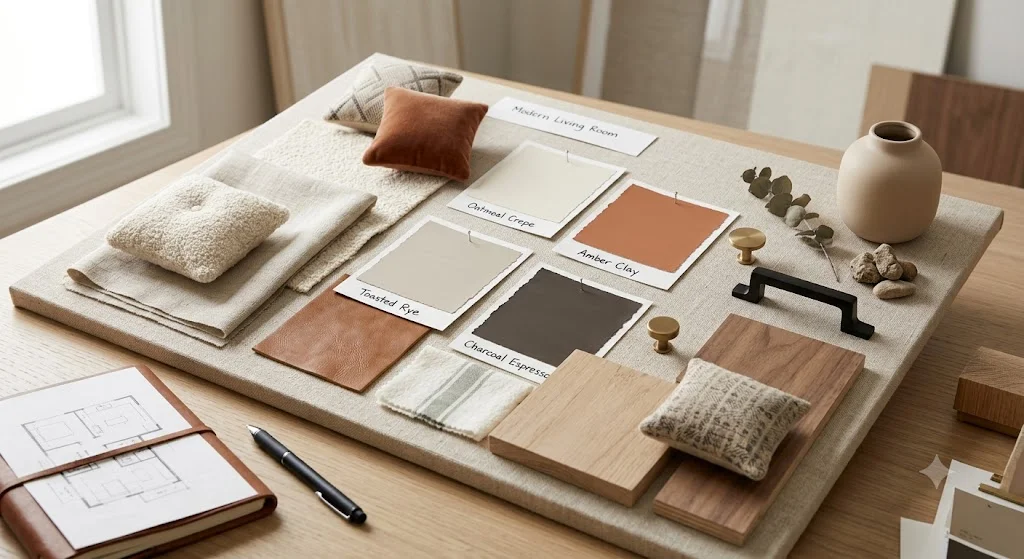
Based on what I have told you about my living room redesign, I need a cohesive color palette. My style direction is [your style — modern, farmhouse, eclectic, etc.]. My favorite colors are [list colors you like]. I have [describe what you are keeping — sofa color, rug, artwork, etc.]. Create a 5-color palette that works together and can be applied as: 1 dominant color for walls, 2 accent colors for larger furniture or features, 2 secondary colors for accessories. Explain why these colors work together and how to use each one in the space.
ChatGPT will give you a specific palette with percentages for how much of each color should be in the room. This removes guessing. You now know exactly what wall color works, what accent colors to add, and how to bring them in through furniture and accessories.
Real value here: You can test this palette before committing. Get paint samples. Buy a few throw pillows in the accent colors. Live with it for a week. Then commit. This gives you confidence that the colors will actually work in your space with your light.
Step 3 — Make Space Planning and Furniture Decisions Data-Driven
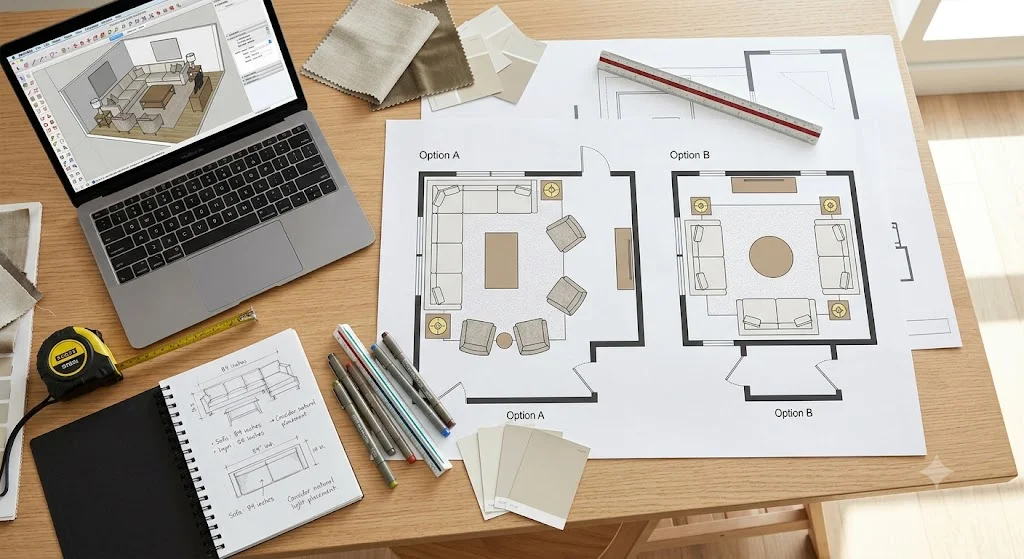
This is where ChatGPT becomes genuinely indispensable. It helps you figure out if keeping your current sofa makes sense, what size coffee table works, whether you need extra seating, what the traffic flow should be.
Use this prompt:
Help me plan the furniture layout for my living room. Here is my space: [dimensions, window placement, doorways, fireplace or focal points, current furniture with dimensions if you know them]. I want to keep [list furniture you are keeping]. I want to add [list furniture you want to add or replace]. The room is used for [describe how you use it — watching TV, entertaining, reading, working, etc.]. What is the best furniture arrangement? What pieces should I keep and what should I replace? What furniture do I still need? How should traffic flow through the space?
ChatGPT will give you specific recommendations. It might tell you your sofa needs to face the window instead of the TV for better light. It might say you need a console table behind the sofa for functionality. It might suggest removing a piece that is making the space feel cramped. These recommendations are based on actual design principles, not aesthetic alone.
Real value here: You know exactly what pieces matter and what is negotiable. If ChatGPT says you need a new sofa for the space to work, you trust that recommendation. If it says your current sofa can stay, you can allocate budget elsewhere. This prevents expensive mistakes.
Step 4 — Create a Prioritized, Budgeted Shopping List
This is where many people derail their redesign. They spend all their budget on one thing and run out of money for everything else. ChatGPT prevents this.

Use this prompt:
I need to create a shopping list for my living room redesign. My total budget is [amount]. The furniture and items I need are [list everything from the previous step]. Prioritize this list so that: 1) The most important pieces for function and impact are listed first. 2) Each item has an estimated budget range. 3) The total stays within my overall budget. 4) Explain what I should invest in quality pieces versus where I can save money. 5) Suggest where to shop for each category — high-end, mid-range, budget-friendly, secondhand options.
ChatGPT will give you a specific, prioritized list. Sofa first. Then paint. Then lighting. Then accent furniture. Then accessories. Each with realistic budget ranges and shopping suggestions. This is your roadmap for spending.
Real value here: You will not run out of budget halfway through. You will not accidentally overspend on accessories while neglecting major furniture. You have a clear plan that balances quality where it matters with smart choices on less critical items.
Step 5 — Get Specific Product Recommendations and Shopping Links
Now comes the actual shopping. But ChatGPT can make this exponentially faster and smarter.
Use this prompt for each furniture category:
I am looking for [sofa/coffee table/rug/etc.] for my living room redesign. Here are the specs: [color, dimensions, style, budget, quality level needed]. Please recommend 5 specific products from different retailers — one high-end option, two mid-range options, one budget option, and one secondhand/vintage option. For each, provide: the product name, retailer, approximate price, why it works for my space, and where to find it.
ChatGPT will give you specific, named products you can actually shop for. Not vague suggestions. Actual products with prices and where to buy them. This takes the guesswork out of shopping and saves you hours of scrolling.
Real value here: You can compare options side by side. You know the price range for quality. You have backup options if something is out of stock. You know why each piece works for your specific space, not just because it looks nice.
Step 6 — Get Help With Styling and Accessories
Once the major furniture is in place, the styling phase can feel overwhelming. How many pillows on the sofa? What size artwork? Where do lamps go? How do you style a bookshelf? ChatGPT handles this beautifully.
Use this prompt:
Help me style my living room with accessories and decor. My room now has [describe furniture and colors]. I want the feel to be [describe style — cozy, modern, eclectic, etc.]. Here are the areas I need to style: [sofa, coffee table, shelving, walls, etc.]. For each area, tell me: how many accessories, what types of items, colors and textures, and specific product categories to look for. Also give me a styling budget range for accessories.
ChatGPT will give you specific guidance. Two throw pillows and a blanket on the sofa. Minimal coffee table styling — just a small plant and a design book. Wall art above the sofa in a specific size and color. This removes the paralysis that comes with endless choices.
Real value here: Your space will look intentional and cohesive, not scattered. Everything serves a purpose. Nothing feels random or overdone.
The Timeline That Actually Works
Do not try to do your entire living room in one week. That is when mistakes happen. Here is a realistic timeline:
Week 1-2: Use ChatGPT to define your style and make all your decisions. Order paint samples. Buy one or two items in accent colors to test in your space. Do not spend money yet.
Week 3-4: Paint walls. Buy and receive major furniture. Arrange furniture. This is the biggest change.
Week 5-6: Buy and style secondary furniture and larger accessories. Lighting. Rugs. Artwork.
Week 7-8: Final styling with accessories. Plants. Throw pillows. Books. Step back and live with it for a week before making final tweaks.
This timeline prevents decision fatigue and gives you time to live with changes before making the next decision. It also spreads the budget impact over weeks, which is easier psychologically.
The Budget Reality
I redesigned my living room for two thousand dollars. A designer would have charged me three thousand just for the consultation. A full design service would have been five to ten thousand. I did eighty percent of the work using ChatGPT and spent twenty percent of what a designer would have cost. That is the real value.
But here is what matters: I did not cheap out on the things that matter. Sofa: one thousand dollars. Quality matters because you use it every day. Paint: one hundred dollars. Worth it for the transformation. Lighting: three hundred dollars. Good light changes everything. Accessories and styling: six hundred dollars. These are replaceable, so budget-friendly options work fine here.
ChatGPT helped me understand where to invest and where to save. That is invaluable.
The Result Worth Actually Doing This
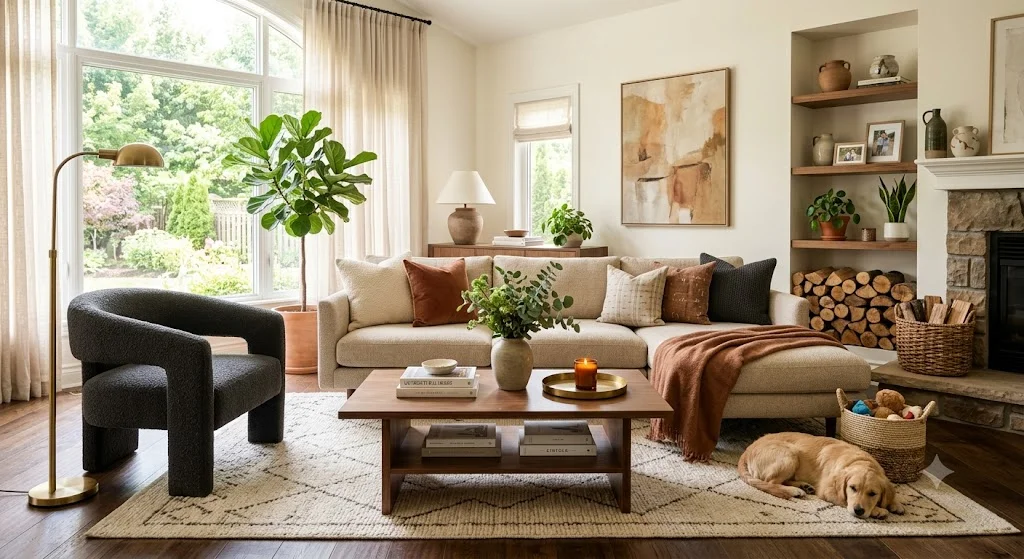
My living room is now a space I genuinely love. It is not Pinterest perfect. It is real. There are dog hairs on the rugs. The throw pillows get messed up. My kids put their artwork all over the walls. But the bones are right. The light is good. The furniture is functional. The colors make me feel calm and happy when I walk into the space.
That is what this process actually delivers. Not perfection. Not a showroom. But a space that genuinely improves your daily life because every decision was intentional and every decision was made with your actual needs in mind.
If your living room is stuck like mine was, use ChatGPT. Spend two weeks making decisions. Spend the next six weeks implementing them. And then live in a space you actually love.
Drop your before and after in the comments. I want to see every living room transformed from tolerated to loved.

