Transform Couple Photos to Royal Family Style Portraits With AI
My parents celebrated their 35th wedding anniversary last year. We wanted to do something special — something beyond a dinner reservation or a gift card. My sister suggested a photo shoot but getting both of them dressed up and in front of a professional photographer felt like it would take weeks to organize and cost more than the celebration itself.
I had a different idea. I found two decent photos of them — one from a family gathering, one from a birthday dinner — uploaded both to Gemini, and spent about an hour writing and refining prompts. What I ended up with was a portrait of my parents that looked like it belonged in a palace hallway. Formal oil painting lighting. Regal posture. Rich jewel-toned clothing. A grand architectural background with columns and draped velvet behind them.
I had it printed large, framed it in an ornate gold frame, and gave it to them at dinner. My mother cried. My father kept picking it up and putting it down and looking at it again. It now hangs in their living room and every single person who visits asks about it.
That experience taught me exactly what makes royal portrait AI prompts work — and what makes them fail. This article covers everything. Four detailed prompts, the specific details that make the difference between a result that looks genuinely regal and one that looks like a costume party, and exactly how to turn the final image into something worth framing.
What Royal Portraits Actually Look Like — And Why It Matters for the Prompts
Before writing a single prompt, it helps to understand what makes a royal portrait look the way it does. These aren’t just fancy photos — they’re a specific visual tradition with very clear rules that have been followed by portrait painters and photographers for centuries.
Lighting is formal and directional. Classic royal portraits use a single strong light source — typically from above and to one side — that creates clear definition on the face and suggests grandeur. It’s not warm and cozy like a family photo. It’s deliberate and sculpted, almost theatrical.
Posture and composition communicate status. Subjects sit or stand upright. Chins are slightly elevated. Hands are placed with intention — resting on a chair arm, holding a small object, or folded formally. Everything about the body language says: this person matters.
The background is never accidental. Grand architectural interiors — marble columns, arched windows, ornate wallpaper, heavy velvet drapes — exist specifically to frame and elevate the subjects. The setting doesn’t compete with the people. It amplifies them.
Clothing and accessories signal wealth and power. Rich fabrics, jewel tones, embroidery, crowns, medals, sashes, pearls, and formal regalia. These elements aren’t decoration — they’re communication. They tell the viewer exactly how important the subject is supposed to be.
Every prompt below is built around these four principles. The more accurately you describe all four — lighting, posture, background, and clothing — the more convincingly royal the result will look.
How to Prepare Your Photos for the Best Results
Go to gemini.google.com and confirm you’re on Gemini 2.0 Flash or higher. Upload one photo per person before pasting your chosen prompt.
For royal portraits specifically, the single most important quality in your source photo is a clear, well-lit face. Royal portraits are all about the face — the expression, the dignity, the presence. If the AI can’t clearly read your facial features from the source image, it will fill in the gaps and the result won’t look like you. A simple close-up portrait taken near a window in good natural light is ideal. Front-facing or a slight three-quarter angle both work well.
It also helps to use a photo where the expression is composed and neutral rather than mid-laugh or very casual. A relaxed, calm expression translates much more naturally into the formal dignity of a royal portrait than a wide smile or an animated expression. That said — if you want a warmer, more approachable royal portrait rather than a strictly formal one, a gentle smile works beautifully too.
These prompts work for couples, individuals, families, and even solo portraits. Simply adjust the number of people mentioned in the prompt to match your situation. Every prompt below is written for two people but adapts easily.
The 4 Prompts — Four Different Royal Eras and Styles
Prompt 1 — The Classic British Royal Portrait
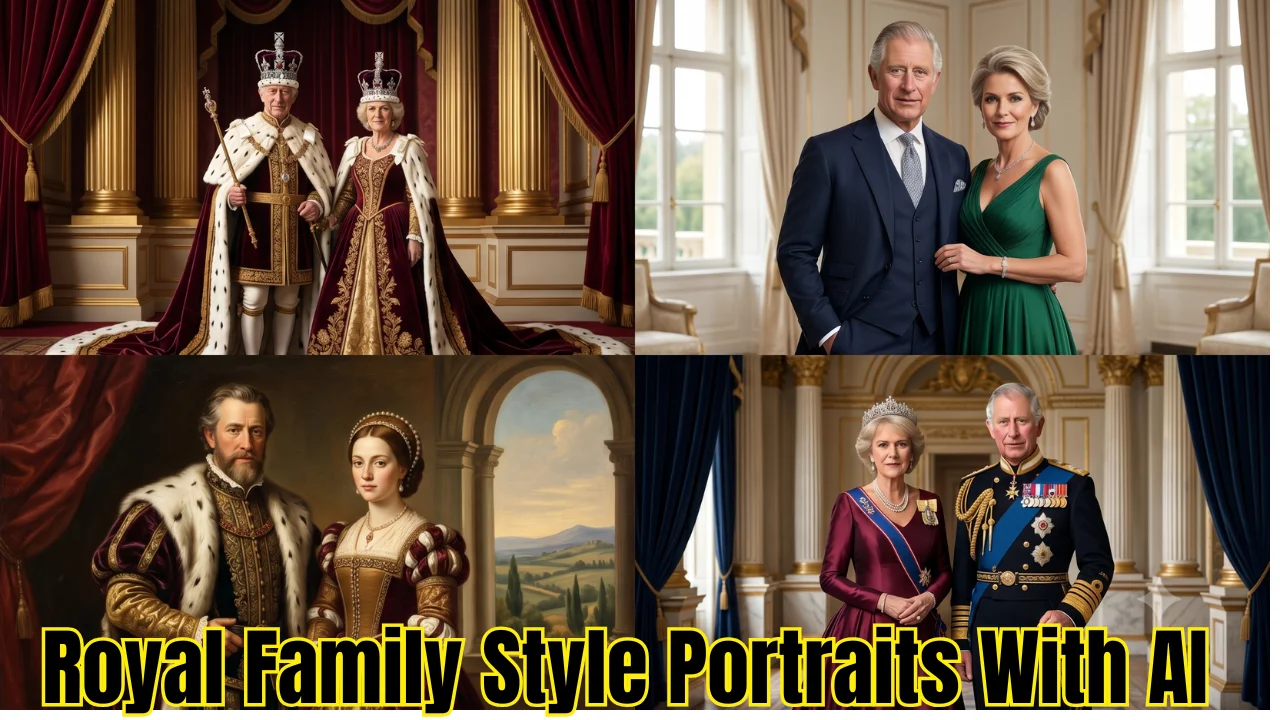
This is the portrait style most people picture when they think of royalty — the kind of formal, dignified image you’d see hanging in a palace or a government building. Think of the official portraits of the British Royal Family: composed, elegant, timeless. The lighting is formal, the setting is grand, and the subjects look like they were born to be painted. This prompt produces results that feel genuinely official — the kind of portrait that demands to be framed.
Prompt:
I am uploading two photos — one of me and one of my partner. Please combine us into a single formal royal portrait in the style of an official British Royal Family portrait. The setting should show a grand palace interior — tall marble columns, heavy velvet drapes in deep royal blue or burgundy, an ornate gilded frame visible in the background, and polished stone floors. The lighting should be formal and theatrical — a single strong light source from above and slightly to the side, creating sculpted shadows that give the faces depth and gravitas. We should be posed with upright, dignified posture — seated in ornate carved chairs or standing formally together, hands placed with intention. Update ou clothing to suggest British royal formal attire: for the woman, an elegant floor-length gown in a rich jewel tone with pearl jewelry and a subtle tiara or decorative hairpiece. For the man, a formal dark military-style dress uniform with gold epaulettes, medals, and a ceremonial sash. Both expressions should be composed, dignified, and slightly warm — formal but not cold. The overall color palette should be rich and deep — navy, burgundy, gold, and cream. Preserve our real facial features from the uploaded photos. The final image should look like an official royal portrait commissioned for a palace or state building.
Pro tip: This is the prompt that works best as a large framed print. Print it at 16×20 or larger on matte or fine art paper, put it in an ornate gold or dark wood frame, and hang it somewhere prominent. The reaction from guests is always immediate and always worth it. Services like Artifact Uprising or Mpix handle the print quality beautifully.
Prompt 2 — The Renaissance Oil Painting Portrait
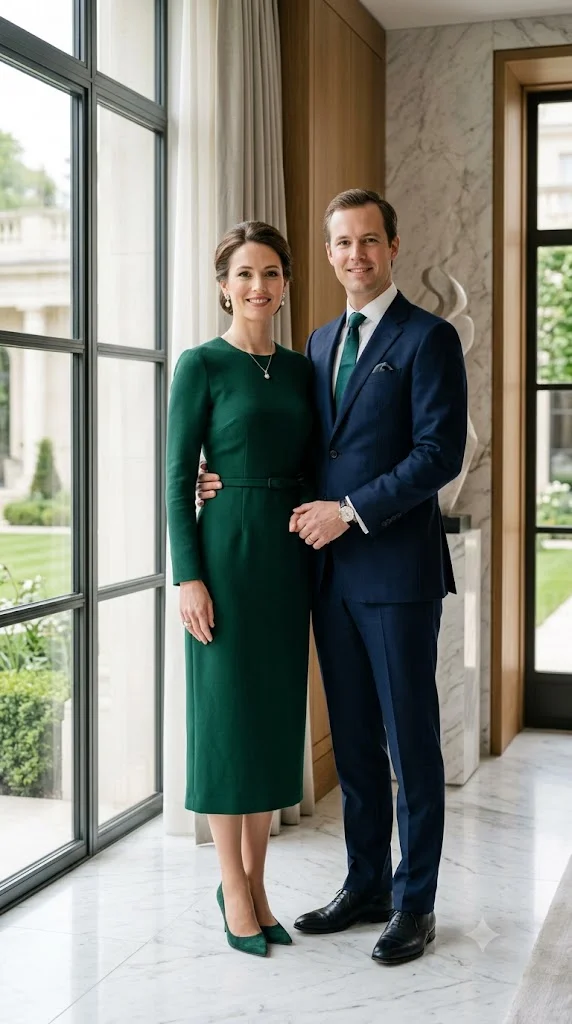
This one pushes the concept further back in time and further into art history. Renaissance oil painting portraits — think Raphael, Titian, Hans Holbein — have a very specific quality that is unlike any photograph. The skin tones are warm and luminous. The fabrics look impossibly rich. The backgrounds show distant landscapes through arched windows. And the whole image has a painterly texture that makes it feel like a genuine work of art rather than a generated image. This is consistently one of the most stunning results in the entire royal portrait category.
Prompt:
I am uploading two photos — one of me and one of my partner. Please combine us into a single portrait rendered in the style of a Renaissance oil painting — specifically in the tradition of 15th and 16th century European royal portraiture by masters like Raphael or Hans Holbein. The image should look like a genuine oil painting: visible brushwork texture, warm luminous skin tones with soft chiaroscuro lighting, rich deep colors with the weight and glow of oil paint. The setting should suggest a Renaissance palace interior with an arched window in the background showing a distant Tuscan or Flemish landscape. We should be dressed in authentic Renaissance royal costume — for the woman: an elaborate gown with a jeweled bodice, puffed sleeves, a pearl headdress, and rich brocade fabric. For the man: a doublet in deep velvet, a fur-trimmed robe, a flat velvet cap, and a gold chain of office. Posture should be formal and composed. Both faces should be painted realistically with the warm, slightly idealized quality of Renaissance portraiture. Preserve our real facial features from the uploaded photos. The final image should be indistinguishable from a genuine Renaissance oil painting of European nobility.
Pro tip: This prompt produces the most artistic result of the four and performs exceptionally well on Pinterest in art, history, and home decor categories — not just couple photography. The painterly quality makes it look like wall art rather than a photo, which dramatically expands the audience that will engage with it. Tag your pin broadly across art history, Renaissance aesthetic, and portrait painting boards.
Prompt 3 — The Modern Royal Couple Portrait
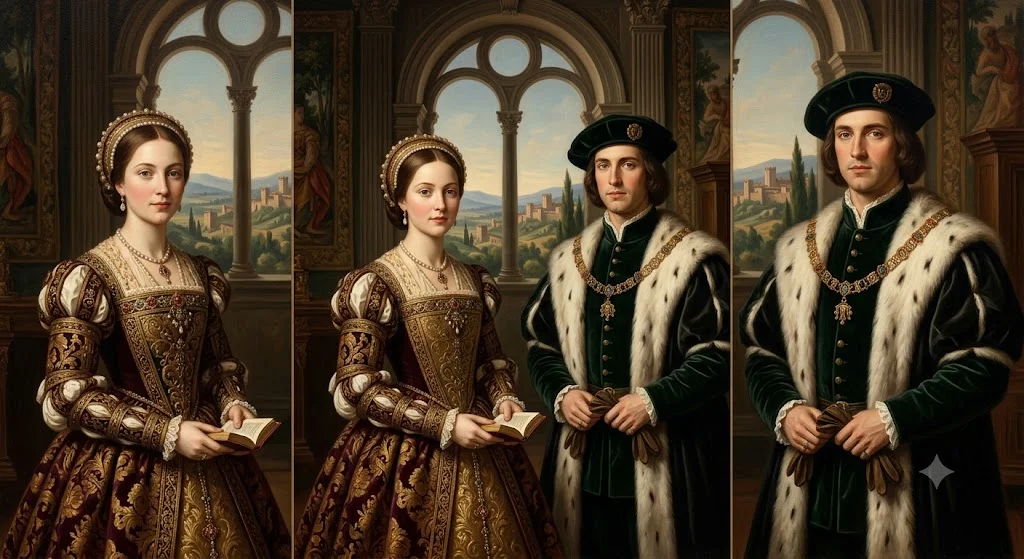
Not everyone wants full regalia and a throne room. The modern royal family — particularly William and Catherine — has popularized a different kind of royal portrait: still formal, still beautifully lit and composed, but more contemporary in fashion and slightly warmer in feeling. This prompt goes for that updated royal aesthetic. It gives you the gravitas and elegance of a royal portrait without the historical costume element, which makes it feel more personal and immediately relatable.
Prompt:
I am uploading two photos — one of me and one of my partner. Please combine us into a single portrait in the style of a modern official royal couple photograph — similar in feeling to contemporary portraits of the British Royal Family. The setting should be an elegant but not overwhelming interior — a beautifully furnished room with tall windows letting in soft natural light, tasteful architectural details, and a neutral or subtly warm background that doesn’t distract from the subjects. The lighting should be soft, flattering, and professional — the kind of carefully controlled natural light used in formal editorial portrait photography. We should be dressed in sophisticated contemporary formal wear: for the woman, an elegant fitted dress or tailored suit in a rich solid color — deep green, navy, or burgundy — with understated jewelry and polished styling. For the man, a sharp dark suit with a tie or a well-fitted blazer and dress shirt. Posture should be upright and composed but not stiff — there should be a sense of warmth and partnership between us. A gentle, dignified smile is appropriate. Preserve our real facial features from the uploaded photos. The final image should feel like an official portrait commissioned for a formal announcement or a high-end lifestyle publication — elegant, timeless, and genuinely regal without being theatrical.
Pro tip: This is the most versatile prompt of the four. Because the clothing and setting are contemporary rather than historical, this result works as a real-world portrait that people can actually use — as a professional headshot background, a formal announcement photo, a holiday card image, or a LinkedIn profile update. The others are statement pieces. This one is genuinely functional.
Prompt 4 — The Grand Coronation Portrait
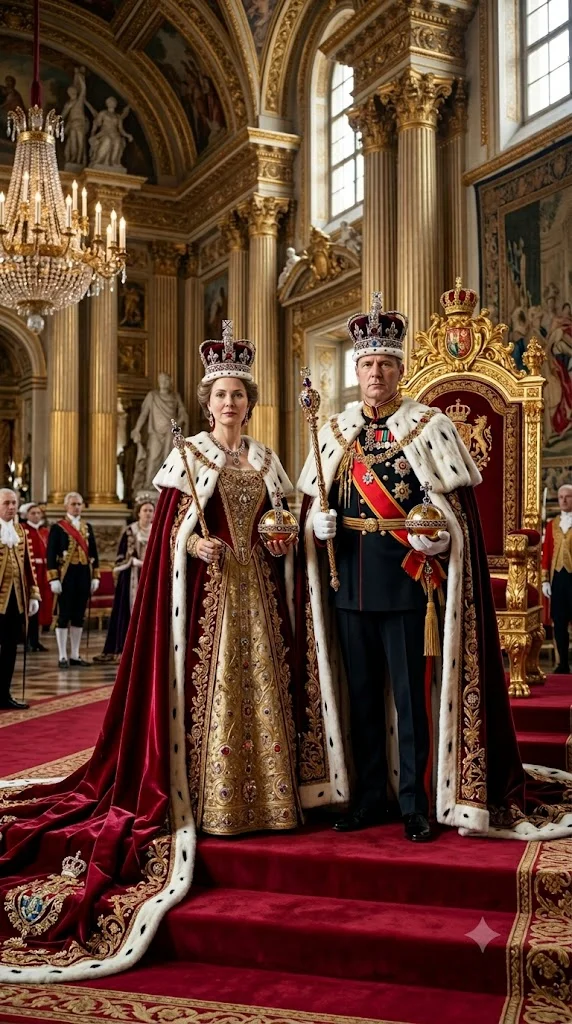
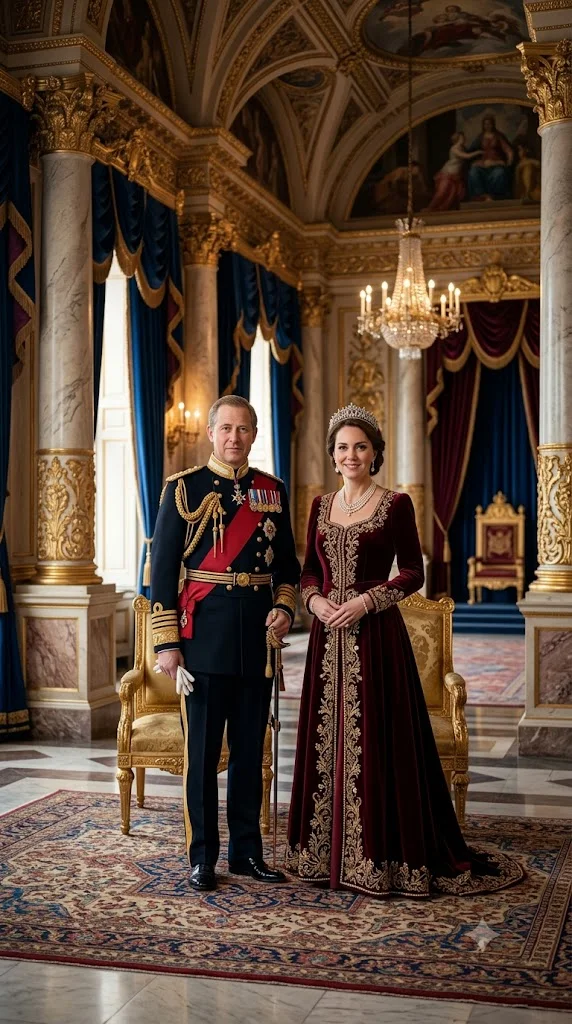
This is the most dramatic and maximalist of the four prompts. Coronation portraits are the most formal, most elaborate, and most visually overwhelming type of royal portraiture — full regalia, crowns, ermine-trimmed robes, scepters, the works. It’s theatrical in the best possible sense. When this one comes out right, it looks like something from a movie production budget of fifty million dollars. It’s not subtle. It’s not supposed to be.
Prompt:
I am uploading two photos — one of me and one of my partner. Please combine us into a grand coronation-style royal portrait — the most formal and elaborate type of royal portraiture, in the tradition of European monarchs’ official coronation paintings. The setting should be maximally grand: a throne room with towering gilded columns, a sweeping red carpet, heavy ermine-trimmed velvet robes draped around and behind us, and a magnificent throne partially visible. The lighting should be dramatic and painterly — strong and directional, creating deep shadows and brilliant highlights that give the scene a timeless, monumental quality. We should be dressed in full coronation regalia: for the woman, a magnificent crown or tiara, a royal gown with a long embroidered train, a ceremonial sash, and jeweled regalia. For the man, a crown, an ermine-trimmed coronation robe over a formal military uniform with medals, a scepter or orb held in one hand. Our posture should be completely upright and commanding — this is the most powerful we will ever look in any photograph. The expressions should be composed, dignified, and slightly imperious — the expressions of people who know exactly who they are. The color palette should be maximally rich: deep crimson, royal purple, gold, ivory, and ermine white. Preserve our real facial features from the uploaded photos. The final image should look like the official coronation portrait of a ruling monarch — grand, overwhelming, and completely unforgettable.
Pro tip: This is the most shareable and reaction-generating of all four prompts — but it needs the most iterations to get right. The amount of detail involved means the first result often has some element that’s slightly off — a crown that doesn’t fit properly, robes that look stiff, or a background that’s slightly too busy. Don’t stop at the first result. Type “refine this — make the crowns more realistic, the robes more luxurious, and the overall composition more balanced” and keep going until it looks exactly right. The payoff is worth the extra iterations.
The Mistakes That Make Royal Portraits Look Cheap
Royal portraits live and die on detail. The difference between an image that looks genuinely regal and one that looks like a Halloween costume is almost entirely in the specifics — and there are a few specific mistakes that consistently flatten the results.
Flat lighting is the biggest killer. If the result looks evenly lit — no clear shadows, no depth on the face — it immediately loses the gravitas that makes royal portraits feel weighty. Add this to any follow-up instruction when you see flat lighting: “Make the lighting more dramatic and directional — one clear strong light source from the upper left, creating defined shadows on one side of each face.”
Generic backgrounds undermine everything else. A beautifully dressed couple in front of a plain or blurry background loses most of its royal impact. The architectural setting is doing half the work. If the background looks too simple, follow up with: “Add more architectural detail to the background — marble columns, ornate wall paneling, heavy draped fabric, and a sense of depth and grandeur.”
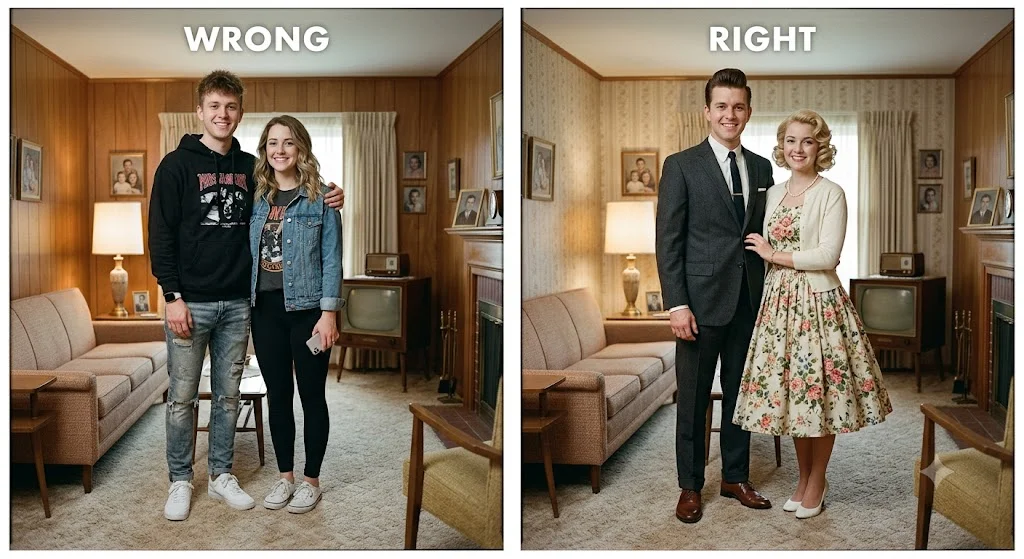
Clothing that isn’t specific enough to an era looks like costume, not royal dress. Vague instructions produce vague results. If the clothing in your result doesn’t look period-accurate or sufficiently formal, specify: “The clothing needs to look more authentically [era] — be specific about the fabric weight, the embroidery, the cut, and the accessories.”
Who These Portraits Are Actually For
The obvious answer is couples — and yes, these make extraordinary anniversary and Valentine’s Day gifts. But the use cases extend much further than that.
Parents and grandparents respond to these images with a depth of feeling that’s hard to describe. There’s something about being depicted as royalty — dignified, timeless, important — that resonates emotionally with older generations in a way that a regular photo never could. The portrait I made for my parents is the example I keep coming back to. It wasn’t just a pretty image. It communicated something about how I see them.
Family portraits with children work especially well with the Renaissance or British Royal style. Seeing a whole family depicted as nobility — children included, with small crowns or period-appropriate accessories — produces results that look like genuine heirlooms.
Birthday milestone gifts — 50th, 60th, retirement — have a new go-to option. A framed royal portrait of the guest of honor, commissioned secretly from their photos and presented at the celebration, is the kind of gift people remember for decades.
Printing and Displaying Your Royal Portrait
These images were made to be printed. On a phone screen they look impressive. On a wall, properly framed, they look extraordinary.
For the British Royal and Coronation styles, print at 16×20 or 20×24 on fine art matte paper and frame in an ornate gold or dark walnut frame. The combination of the large format and the elaborate frame completes the effect — it genuinely looks like a commissioned portrait.
For the Renaissance oil painting style, look for a service that offers canvas printing — printing on canvas adds a texture that makes the painterly quality of the image even more convincing. CanvasPop and Easy Canvas Prints both do excellent work at reasonable prices.
For the Modern Royal style, a clean 11×14 or 16×20 print on lustre paper in a simple silver or dark frame looks clean and sophisticated — more editorial than palace, which suits the contemporary feel of the prompt.
Every Family Deserves a Portrait Like This
My parents’ anniversary portrait is still the thing I’m most proud of making with AI. Not because of the technical achievement — the prompting wasn’t complicated once I understood the principles. But because of what it communicated. It told them that I see them as important. As dignified. As people whose story deserves to be rendered beautifully and hung on a wall.
That’s what a royal portrait does at its best. It doesn’t just make someone look fancy. It makes them feel seen in a specific and powerful way — as someone whose presence in the world is worth commemorating with the same care and grandeur that has been reserved for kings and queens for five hundred years.
Upload your photos, pick your prompt, and give someone that feeling. It costs nothing but a few minutes of your time and produces something they will keep for the rest of their lives.
Drop your results in the comments — I’d love to see who you decided to make royalty today.