Transform Your Photos Into Watercolor Paintings Using AI — The Art That Feels Handmade

I have always wanted to be someone who could paint. Someone who could take a moment from real life and translate it into art with brushstrokes and color and the kind of intentional imperfection that makes watercolor so beautiful. But I took one painting class in college and immediately understood: I have no talent for this. I can appreciate watercolor. I cannot create it.
Last spring I found myself wanting a watercolor portrait of my family. A nice one. The kind you would frame and keep forever. Professional artist quotes started at two hundred dollars. For a painting based on photos. I do not have two hundred dollars for that and I suspect most people do not either.
So I did what I have learned to do now: I took a family photo and spent an evening with Gemini transforming it into a watercolor painting. The result was absolutely stunning. It looked like a real watercolor — visible brushstrokes, watercolor texture, the color bleeding and flowing the way real watercolor does. But it was also unmistakably us. Our faces. Our moment. Our memory. Rendered in the artistic medium I have always loved but could never create myself.
I printed it on watercolor paper and framed it. It sits in our living room now and every person who visits asks if I painted it. When I tell them I did not — that it was created with AI from a phone photo — they struggle to believe me until I show them the source image.
This is the democratization of art. The ability to take something you love — a memory, a moment, a person, a place — and have it rendered in a beautiful artistic medium without needing years of training or hundreds of dollars. These four prompts give you that. Four different watercolor styles. Four ways to see your photos as art.
Why Watercolor Is Perfect for This Transformation
Watercolor is having a massive moment right now. On Pinterest, on Instagram, in home decor — watercolor art is everywhere. And for good reason. It has qualities that no other medium shares:
It is beautiful and imperfect simultaneously. Watercolor does what you want and also does its own thing. Colors bleed. Edges blur. Something unexpected happens. That is not a flaw — that is the magic. That is what makes watercolor feel alive and genuine.
It communicates emotion and personality. A photograph is objective. A watercolor is subjective. It suggests the artist’s interpretation of the moment, not just the moment itself. Watercolor makes ordinary moments feel meaningful and intentional.
It has distinct visual character without being cartoon-y. Unlike filters or comic book style, watercolor renders real faces and real places with artistic interpretation while maintaining recognition and authenticity. You still look like you. The place still looks like that place. But it all feels painted with care and intention.
It is gallery-quality wall art. A watercolor painting feels like something worth keeping. Worth framing. Worth hanging somewhere important in your home. It does not feel like a filtered photo. It feels like art.
Those qualities are exactly what these prompts are designed to capture.
How to Prepare Your Photo for Best Watercolor Results
Go to gemini.google.com and confirm you are using Gemini 2.0 Flash or higher. Upload your photo before pasting any prompt.
Watercolor paintings are actually quite forgiving in terms of source photo quality, because the artistic interpretation can improve upon technical limitations. But certain qualities still matter:
Clear composition. A photo where it is clear what the subject is and what the focal point should be. Watercolor artists interpret, but they start with a clear subject to interpret.
Good lighting or clear tonal values. Watercolor works with light and shadow. A photo with clear distinction between light and dark areas translates more beautifully into watercolor than a flat, evenly-lit photo.
Genuine emotion or connection visible. Watercolor excels at capturing feeling. If your source photo shows real emotion — genuine connection, authentic expression, real moment rather than posed moment — the watercolor result will feel more authentic and moving.
Acceptable background. Simple backgrounds are fine. Complex backgrounds are fine. Watercolor can interpret anything. Just avoid photos that are extremely dark, very blurry, or heavily filtered, as these give the AI less to work with.
The best watercolor source photos are ones where you genuinely love the moment captured — because that authenticity translates into the painting.
The 4 Prompts — Four Different Watercolor Styles
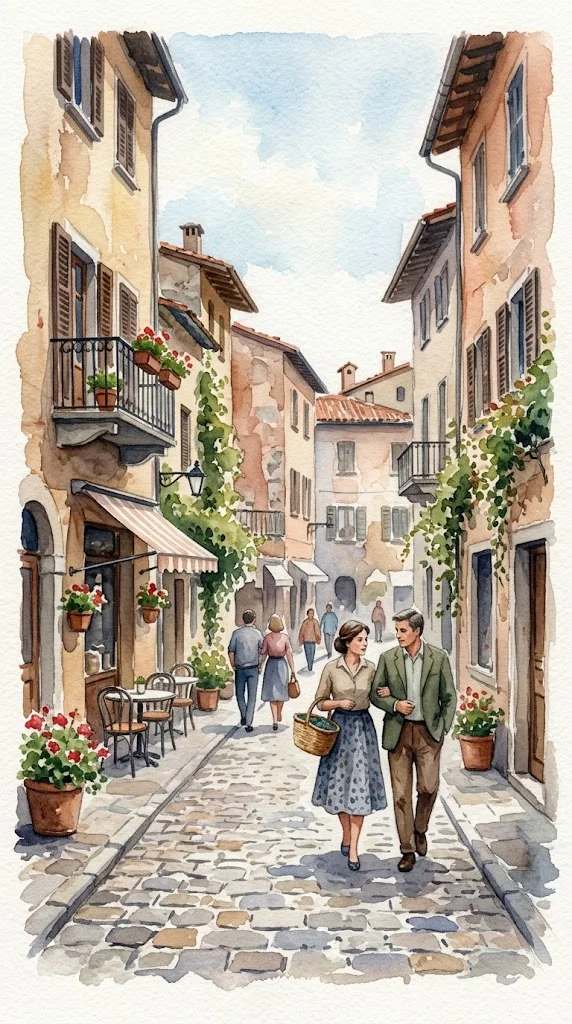
Prompt 1 — The Classic Realistic Watercolor
This is the one I made for my family portrait — watercolor that balances realistic detail with artistic interpretation. Your photo is rendered in traditional watercolor style with visible brushstrokes, color blending, and that specific quality of wet-on-wet painting. But the people are still clearly recognizable. The place is still identifiable. It is realistic enough to feel authentic but artistic enough to feel like genuine art.
Prompt:
I am uploading a photo. Please transform this into a classic realistic watercolor painting. The style should be traditional watercolor: visible brushstrokes, watercolor texture, natural color blending with that specific quality of watercolor where colors flow and bleed into each other naturally. The painting should be detailed enough to be recognizable — faces should be clearly rendered, places should be identifiable — but with an artistic interpretation rather than photographic accuracy. Use a traditional watercolor color palette with natural, harmonious colors. The brushwork should suggest skilled hand-painting: confident strokes, intentional color choices, areas where detail is emphasized and areas where it is suggested rather than rendered precisely. The background can be simplified or abstracted slightly, but the main subjects should remain clear and recognizable. The overall feeling should be of a real watercolor painting created by a skilled artist looking at the source photo — authentic, genuine, painted with care and intention. Preserve the likeness of people and the character of places perfectly while rendering everything in the artistic language of watercolor.
Pro tip: This is the single best result for framing and wall art. Print on watercolor paper at 11×14 or 16×20, frame in a simple wood frame with a mat, and hang prominently. It genuinely looks like you commissioned a watercolor painter. The reaction is always emotional and meaningful.
Prompt 2 — The Loose Impressionist Watercolor
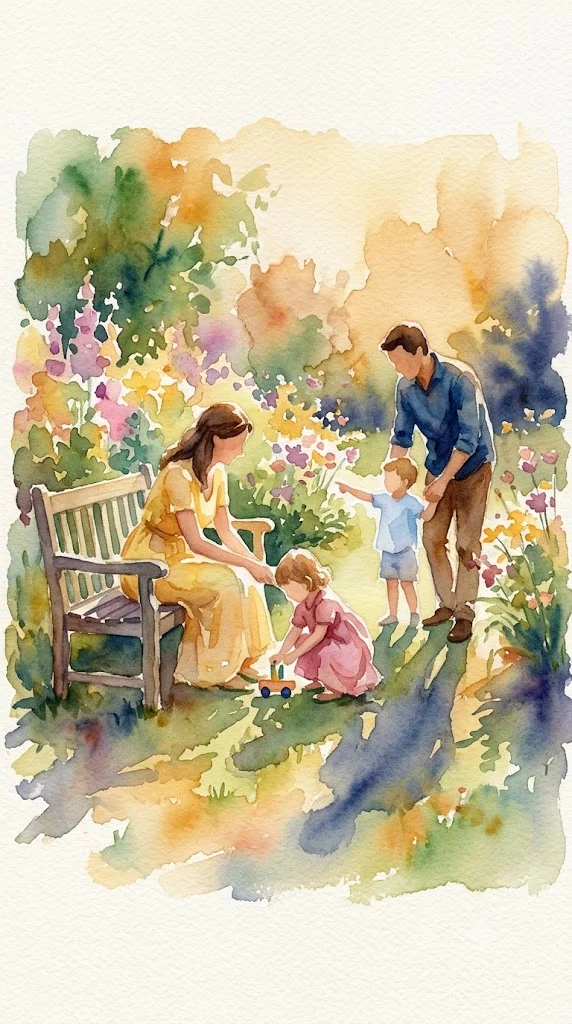
Not all watercolor aims for realism. Some watercolor is about pure impression — capturing the essence and feeling of a moment rather than precise detail. This prompt goes for that loose, gestural, impressionistic style where brushstrokes are visible and expressive. Colors are interpreted rather than matched. The overall feeling is captured more than the details. It is more abstract while still maintaining recognition of people and places.
Prompt:
I am uploading a photo. Please transform this into a loose, impressionistic watercolor painting. The style should emphasize feeling and atmosphere over precise detail. Use loose, expressive brushstrokes that suggest rather than describe. Colors should be interpreted and harmonized rather than exactly matched. The painting should capture the essence and mood of the moment — the warmth, the energy, the emotional truth — rather than photographic accuracy. Some areas should be detailed, others suggested or abstracted. Backgrounds can flow and blend freely. The overall composition should feel painterly and artistic — this is an artist’s interpretation of the moment, not documentation. The color palette should be beautiful and intentional even if not strictly realistic. Maintain enough clarity that main subjects are recognizable but allow the artistic interpretation and impressionistic style to dominate. The final image should feel like a painting by an impressionist watercolorist — capturing light and mood and feeling above all else.
Pro tip: The loose, expressive quality of this prompt is incredibly shareable on Pinterest because of its artistic beauty and emotional resonance. The impressionistic style appeals across art, home decor, gifts, and personal development boards. This is the best version to use for a Pinterest pin thumbnail.
Prompt 3 — The Botanical Watercolor
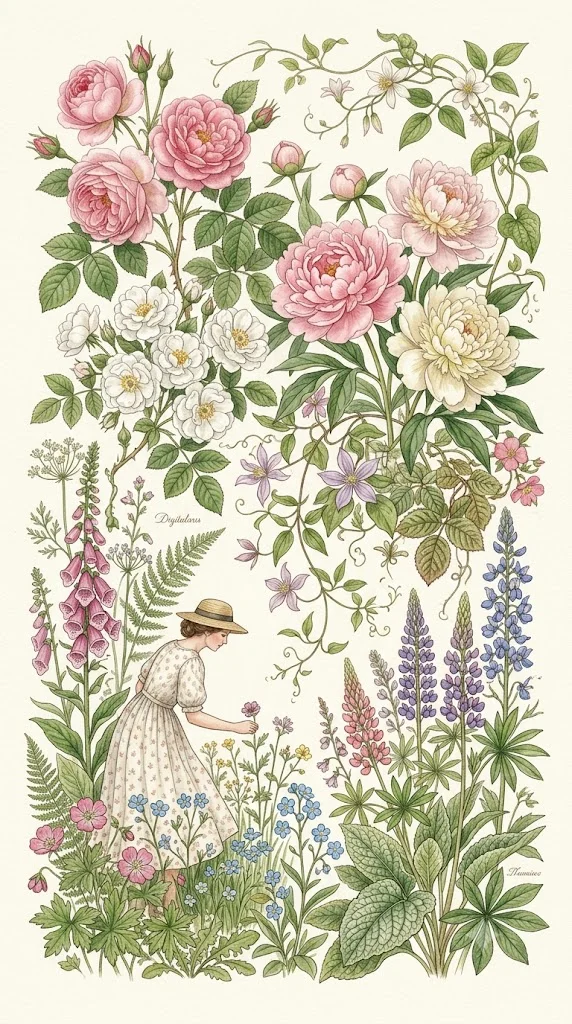
If your photo includes nature — flowers, gardens, landscapes, outdoor settings — this prompt transforms it into the style of a botanical watercolor. Think the kind of detailed, beautiful plant illustrations you see in vintage botanical books. Flowers are rendered with particular care. Foliage has the delicate quality of botanical art. People are part of the landscape but nature is celebrated with particular artistry. It is a specialized style but produces results that are absolutely stunning if your photo has natural elements.
Prompt:
I am uploading a photo with natural elements. Please transform this into a botanical watercolor painting in the style of classic botanical illustration. The painting should emphasize the natural elements — flowers, plants, foliage — with particular detail and care, rendered in the delicate, detailed style of botanical watercolor art. Use a traditional botanical palette with naturalistic but beautifully interpreted colors. Flowers and plants should be rendered with special attention to detail: petals individually suggested, leaves showing veining and structure, the specific character of each plant species. Human subjects should be present but secondary to the natural world — integrated into the landscape rather than dominating it. The background can be more abstracted or suggested. The overall style should be reminiscent of vintage botanical illustration — detailed where it matters, simplified where it does not, with the specific aesthetic of scientific-but-beautiful plant illustration. The final image should feel like a page from a beautiful vintage botanical book where people are part of a natural scene rendered with artistic and scientific care.
Pro tip: This prompt is absolutely massive on Pinterest in gardening, botanical art, and nature lover boards. If your photo includes flowers, plants, or garden settings, this is a specialized tool that performs exceptionally well. The combination of scientific accuracy and artistic beauty appeals to a very engaged audience.
Prompt 4 — The Portrait Studio Watercolor
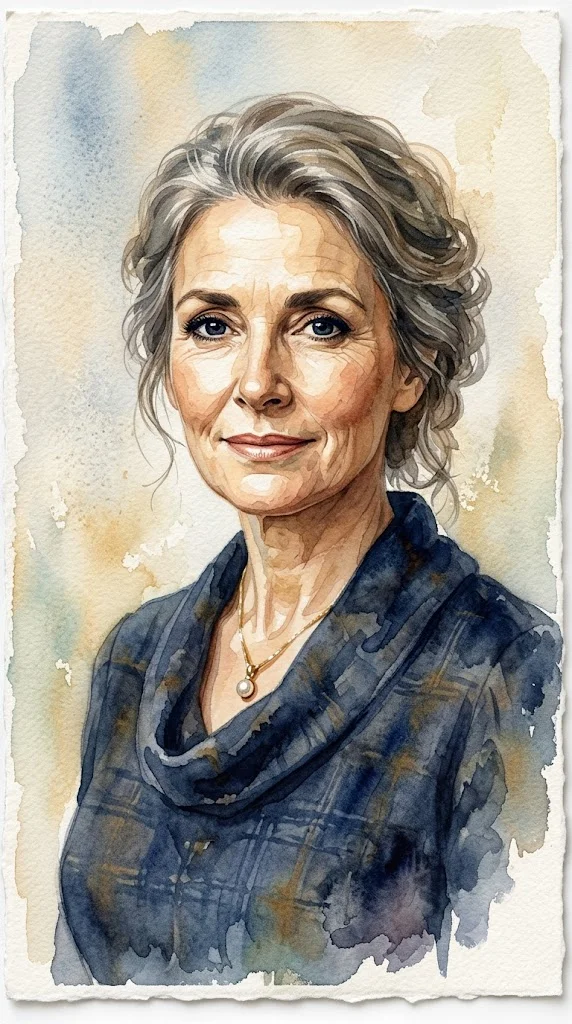
Portrait watercolor has its own specific tradition — formal but artistic, focused on the face but with beautiful color interpretation. This prompt is specifically designed for people portraits where the face and expression are the primary focus. The background becomes abstracted or simplified so nothing competes with the face. The brushwork is confident. The colors are interpreted beautifully. It is watercolor that honors portraiture tradition while being fully artistic.
Prompt:
I am uploading a portrait photo. Please transform this into a traditional watercolor portrait painting. The focus should be entirely on the face and upper figure — rendered in beautiful watercolor with particular attention to capturing likeness and expression. The face should be detailed and clearly recognizable with skillful watercolor technique: natural skin tones interpreted beautifully, eyes rendered expressively, the character and emotion of the subject coming through clearly. The background should be simplified or abstracted — perhaps suggested with loose brushstrokes, soft colors, or subtle texture — but never competing with the face. The hair, clothing, and figure can be suggested more loosely while the face maintains strong clarity. Use a harmonious color palette that flatters the subject while remaining true to watercolor tradition. The brushwork should be confident and skilled — visible strokes that show artistic mastery. The overall effect should be of a beautiful watercolor portrait painting that could hang in a gallery or be published as portrait art. Preserve the exact likeness and expression of the subject from the source photo while rendering everything in the artistic language of watercolor portraiture.
Pro tip: This is the best prompt for individual portraits, headshots, or any image where the face is the primary subject. Works beautifully as a gift, a family keepsake, or a personal portrait. Print at 11×14 for maximum impact.
Common Issues and How to Fix Them
The most common problem is the result looking too digital or too much like a filter rather than an actual watercolor painting. The colors look painted but the texture does not feel like real watercolor. The image lacks the imperfection and flow that makes watercolor feel authentic.
Fix this with: “This should look like an actual watercolor painting — visible brushstrokes, watercolor texture, the characteristic flow and blending of watercolor pigment on wet paper. It should feel like a real painting, not a digital filter or illustration.”
The second most common issue is losing the likeness of people in pursuit of artistic abstraction. The painting is beautiful but it does not look like the person anymore. Add: “The painting must preserve clear, recognizable likeness of the people in the source photo. Artistic interpretation yes, but the face should still be clearly identifiable as the specific person.”
And if the colors feel wrong or the painting lacks harmony: “Use a beautiful, harmonious watercolor color palette. The colors should work together gracefully with the softness and transparency that characterizes watercolor painting.”
What to Do With Your Watercolor Paintings
Watercolor paintings are meant to be kept, displayed, and shared in ways that celebrate their status as actual art:
Print on watercolor paper and frame. This is the single most impactful use. Watercolor paper brings out the texture and quality of the painting. A simple wood frame with a mat looks gallery-quality. Hang somewhere prominent in your home.
Art gifts for loved ones. A watercolor portrait of someone’s beloved person, pet, or place is one of the most touching and personal gifts you can give. It says: I had a portrait of you created as art.
Family keepsakes and heirlooms. A beautiful watercolor of your family becomes something you keep forever. Something you might frame and pass down. Something that becomes a record of a moment rendered as art.
Canvas or decorative prints. Services like CanvasPop offer canvas printing which adds texture to the watercolor aesthetic. A canvas print of a watercolor painting brings the artistic quality forward.
Pinterest and social sharing. Watercolor artwork is genuinely one of the most saved categories on Pinterest. Art, home decor, gift ideas, personal development — watercolor performs exceptionally well across all these boards.
You Do Not Have to Be an Artist to Create Art
That is the whole point of this. I cannot paint. I will never paint. But I can take a photo I love and have it rendered in a beautiful artistic medium. I can have my family portrayed as if a skilled watercolor artist spent hours translating our moment into art. I can frame it and keep it forever. I can give it as a gift and watch someone understand that I love them enough to have their portrait painted.
That is what these prompts offer. Not a replacement for actual artists — because actual artists are beautiful and necessary. But a tool for people like me who love art, understand the value of art, but do not have the years of training or the hundreds of dollars to commission it.
Take your favorite photo. Upload it. Pick a watercolor style. Then print it on watercolor paper, frame it, and live with it. You have just created art. Your art. From your life. In a medium that feels timeless and genuine and beautiful.
Drop your watercolor painting in the comments. I want to see every artistic interpretation, every moment translated into art, every life rendered beautiful through watercolor.