How to Transform Your Couple Photos Into Groovy 70s Disco Portraits Using AI
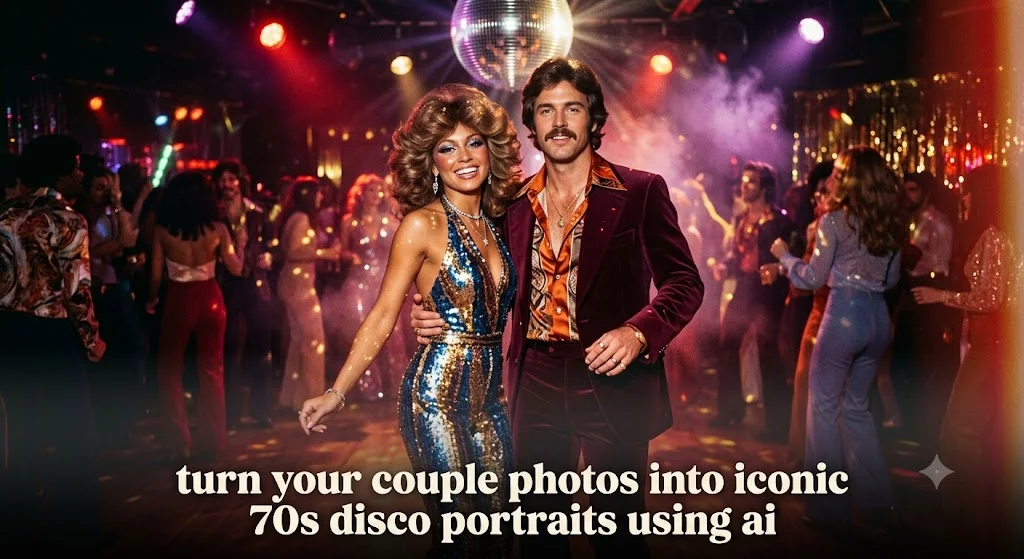
It started as a joke. My wife and I were watching old footage of Studio 54 on YouTube — that legendary New York disco club where everyone from Andy Warhol to Mick Jagger showed up looking like they had invented the concept of fun — and she turned to me and said, “we would have been regulars.”
I said I could prove it. Forty minutes later I had a portrait of the two of us that looked like it was taken on the dance floor of a 1970s disco club. Bell bottoms, sequins, a spinning mirror ball throwing light in every direction, and that warm, slightly overexposed film quality that makes every 70s photo look like a memory you didn’t know you had.
She has not stopped showing people. We have been asked to recreate it as a Halloween costume twice.
The 70s disco aesthetic is having a massive moment right now — in fashion, in music, in interior design, and absolutely on Pinterest. These four prompts cover the full range of the era, from the glamorous Studio 54 dance floor to a sun-drenched 70s road trip to a groovy outdoor festival scene. Each one is a completely different slice of the decade. Try them all and find your 70s alter ego.
What Makes the 70s Look So Instantly Recognizable
The 1970s had one of the most visually distinctive aesthetics of any decade in the twentieth century. Once you know what to look for, you can identify a 70s photograph in about half a second.
The film quality. 70s photography had a specific warmth and grain — slightly overexposed, with faded yellows, warm oranges, and deep browns dominating the palette. Colors were rich but never harsh. Highlights bloomed softly. Shadows had a warm undertone rather than a cold one. It’s a look that feels simultaneously dated and incredibly beautiful.
The fashion. Wide lapels, bell bottoms, platform shoes, halter tops, wrap dresses, feathered hair, and more polyester than any decade before or since. The clothing of the 70s is so specific and so bold that it does half the work of establishing the era on its own. Getting the fashion right in the AI prompts is crucial.
The settings. Disco clubs with mirror balls and colored stage lighting. Wood-paneled rooms. Shag carpets. Outdoor concerts and festivals. Sun-drenched highways with classic muscle cars. Each setting carries its own specific flavor of the decade and produces a very different emotional result.
The prompts below are built around all three of these elements working together. The more specifically you can describe the film look, the fashion, and the setting, the more convincingly the AI can transport you back to the decade.
Getting Started in Gemini
Open gemini.google.com and make sure you’re using Gemini 2.0 Flash or higher. Upload one clear photo of yourself and one of your partner in the same chat message, then paste whichever prompt you want to try first.
For 70s style portraits, photos with warm lighting already in them tend to produce the best results. If your source photo was taken in golden hour light, under warm indoor lighting, or near candles, the AI has an easier time matching that warmth to the 70s film palette. Photos taken in harsh daylight or cool blue light can sometimes fight against the warm tones the prompts are trying to create — though a good follow-up instruction can usually correct this.
One more thing worth knowing: the 70s fashion transformation is one of the most dramatic outfit changes Gemini will make in this entire series. Bell bottoms and sequined halter tops are a long way from whatever you’re wearing in your source photo. Don’t be surprised if the clothing in the first result isn’t quite period-accurate enough — a simple follow-up asking for more authentic 70s fashion details almost always improves it significantly.
The 4 Prompts — Four Different Flavors of the Seventies
Prompt 1 — The Studio 54 Disco Floor
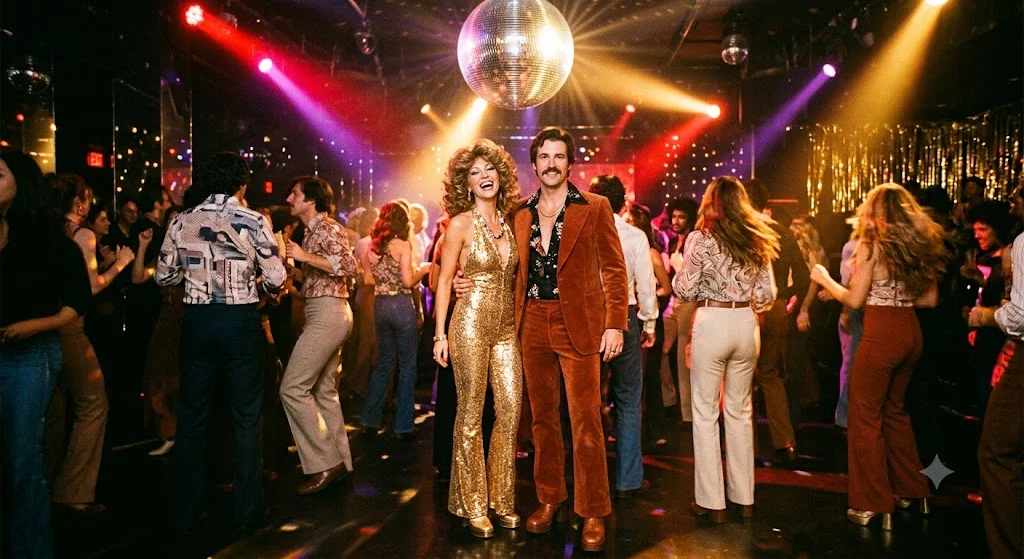
This is the one that started the whole adventure for my wife and me, and it remains the most electrifying of the four. Studio 54 was the most famous nightclub in the world for a few extraordinary years in the late 1970s. The energy, the fashion, the lighting — it was unlike anything before or since. This prompt puts you right in the middle of it.
Prompt:
I am uploading two photos — one of me and one of my partner. Please combine us into a single couple portrait set on the dance floor of a glamorous 1970s disco club in the style of Studio 54. The background should show a packed, electric dance floor — a large spinning mirror ball hanging from the ceiling throwing shards of light in every direction, colored stage lights in deep reds, purples, and golds sweeping across the crowd, and blurred figures dancing all around us. The lighting on us should be dramatic and colorful — mirror ball reflections dotting our clothing and faces, warm stage light from below and behind. We should be dressed in authentic peak 70s disco fashion — for the woman: a sequined halter dress or a metallic wrap dress, platform heels, dramatic eye makeup, and feathered or voluminous hair. For the man: a wide-lapel fitted suit in a bold color, a patterned shirt open at the collar, and styled hair with a slight wave. We should look like we are the most glamorous people in the room — confident, joyful, completely in our element. Apply a warm, slightly overexposed 1970s film quality to the entire image — rich warm tones, soft grain, slightly faded highlights. Preserve our real facial features from the uploaded photos. The final image should feel like a professional photograph taken inside Studio 54 at the height of the disco era.
Pro tip: The mirror ball light pattern — those scattered dots of reflected light across clothing and faces — is what makes this result look instantly authentic. If the first result doesn’t show it clearly, add: “Make the mirror ball reflections much more visible — small bright dots of light scattered across our faces, hair, and clothing.”
Prompt 2 — The Sun-Drenched 70s Road Trip
The 70s weren’t only about disco clubs. Some of the most iconic images of the decade were taken outdoors — open highways, classic cars, wide open American landscapes. The road trip aesthetic of the 70s has its own very specific warmth and freedom to it. This prompt captures that outdoor, sun-soaked side of the decade and tends to produce results that feel more personal and less theatrical than the disco floor shot — but every bit as beautiful.
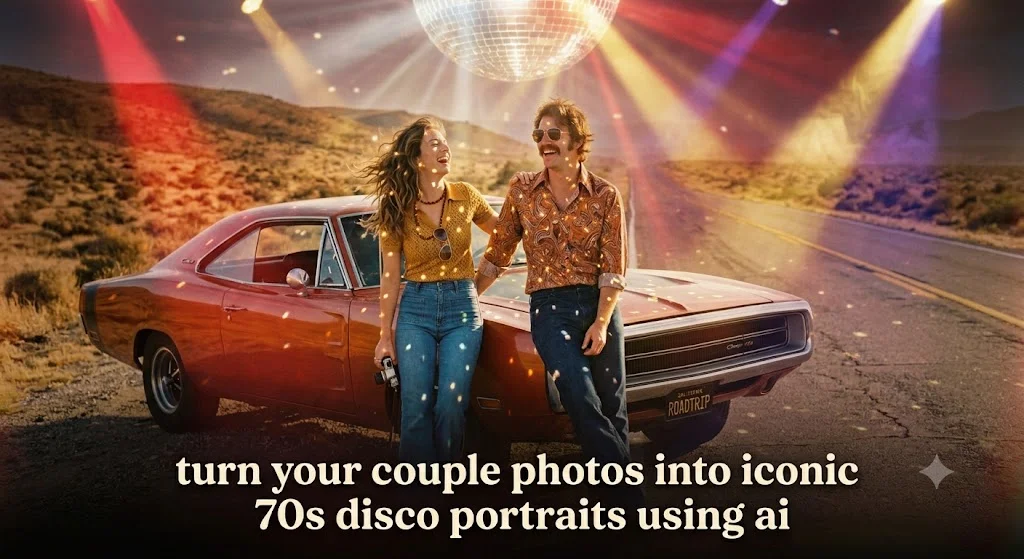
Prompt:
I am uploading two photos — one of me and one of my partner. Please combine us into a single couple portrait styled as a 1970s road trip photograph. Place us beside or leaning against a classic 1970s American muscle car or a vintage VW van on an open highway, with a wide sun-drenched landscape stretching behind us — desert, rolling hills, or a flat American highway disappearing into the horizon. The lighting should be bright and warm — midday or late afternoon sun, slightly overexposed in the highlights. Apply a strong 1970s film aesthetic — warm yellows and oranges dominating the palette, visible grain, slightly faded colors with soft washed-out highlights. We should be dressed in casual 70s fashion — for the woman: high-waisted flare jeans, a flowy printed blouse or crop top, round sunglasses, and a headscarf or loose natural hair. For the man: wide-leg jeans, a patterned short-sleeve shirt open at the chest, aviator sunglasses. The mood should feel free, joyful, and completely unbothered — like two people with nowhere to be and all the time in the world. Preserve our real facial features from the uploaded photos. The final image should feel like a candid photo from a real 1970s American road trip.
Pro tip: This is the most universally appealing prompt of the four — the warm, free, outdoor energy resonates with a very wide audience. It also works beautifully as a summer Pinterest pin even though it’s set in the past. Pin it to boards covering road trip content, summer aesthetics, and vintage Americana in addition to couple photography.
Prompt 3 — The Groovy Indoor House Party
Between the disco clubs and the open highways, a huge amount of 70s social life happened in living rooms. Wood paneling. Shag carpet. Lava lamps. Record players. The warm, amber-lit interior of a 1970s house party has a specific coziness to it that feels incredibly nostalgic even if you weren’t alive for it. This prompt goes for that intimate, warm, indoor 70s vibe.
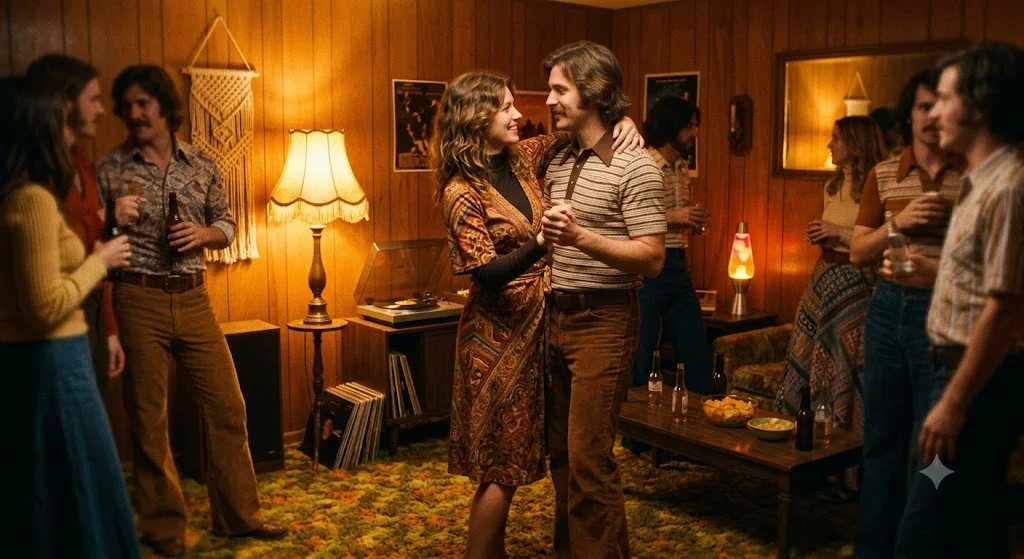
Prompt:
I am uploading two photos — one of me and one of my partner. Please combine us into a single couple portrait set inside a warmly lit 1970s home interior. The setting should feel authentically 70s — wood-paneled walls, shag carpet in earthy tones, a record player in the corner, a lava lamp glowing nearby, macrame wall art, and warm amber lighting from floor lamps. Other partygoers can be suggested in the soft background. The lighting should be entirely warm and low — amber, gold, and deep orange tones from vintage lamps creating a cozy, intimate glow. Apply the full 1970s film aesthetic — warm saturated color palette, visible grain, soft focus on the edges of the frame. We should be dressed in 70s casual-chic fashion — for the woman: a wrap dress or wide-leg pants with a fitted top, natural makeup, and loose flowing hair. For the man: corduroy flares, a knit turtleneck or patterned collared shirt, sideburns suggested. The mood should feel warm, relaxed, and genuinely happy — two people completely at home in their decade. Preserve our real facial features from the uploaded photos. The final image should feel like a candid photograph taken at a 1970s house gathering — intimate, warm, and deeply nostalgic.
Pro tip: The warm amber indoor lighting of this prompt produces the richest, most film-like color result of all four prompts. It looks incredible printed on warm-toned paper. If you want to create a gift that feels genuinely vintage and personal — a framed print for a parent or grandparent who actually lived through the 70s — this is the one to use.
Prompt 4 — The Outdoor Summer Festival
Woodstock happened in 1969, but the outdoor festival culture it created defined the aesthetic of the early 1970s. Sun-drenched fields, flower crowns, acoustic guitars, tie-dye, and that golden hazy light that seems to exist only in summer photographs from that era. This prompt captures the outdoor festival side of the 70s — more bohemian than disco, more earthy than the road trip, and absolutely beautiful.
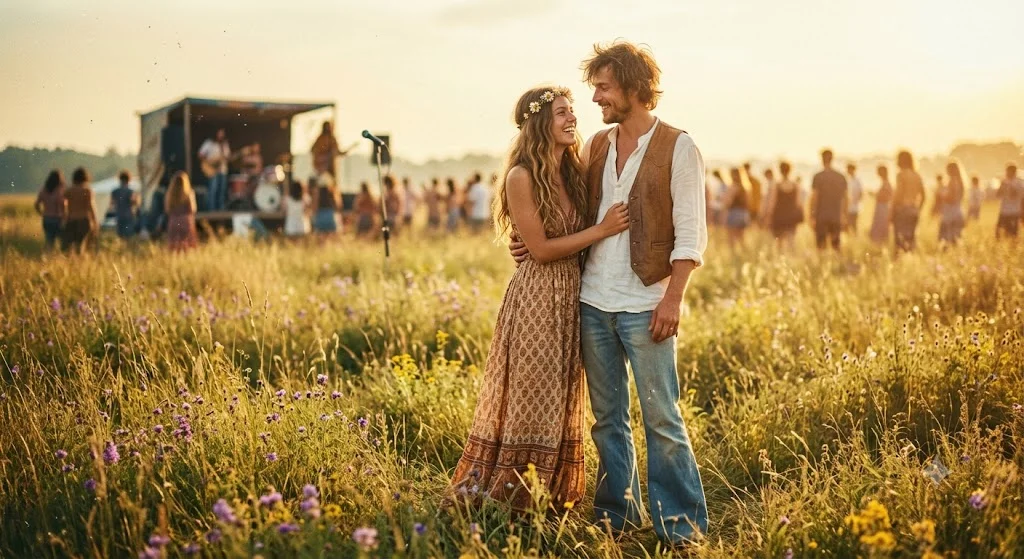
Prompt:
I am uploading two photos — one of me and one of my partner. Please combine us into a single couple portrait set at an outdoor summer music festival in the early 1970s. The background should suggest a sun-drenched festival field — a large crowd of festival-goers in the distance, a makeshift stage, tall grass and wildflowers in the foreground, and a wide open sky with that hazy golden afternoon light specific to 1970s summer photography. The light should be warm, slightly overexposed, and golden — the kind of light that makes everything look like a memory. Apply a strong 70s film aesthetic — heavy grain, warm yellows and faded greens, soft washed-out highlights, slightly low contrast in the shadows. We should be dressed in early 70s bohemian festival fashion — for the woman: a flowy printed maxi dress or denim shorts with a floral peasant blouse, a flower crown, and long natural hair. For the man: flared jeans, a loose linen shirt or band tee, and natural relaxed styling. The mood should feel free, joyful, and sun-drunk — two people at the best outdoor concert of their lives. Preserve our real facial features from the uploaded photos. The final image should feel like a real photograph taken at a 1970s outdoor music festival — warm, hazy, and impossibly nostalgic.
Pro tip: The heavy grain and hazy golden tones this prompt produces make it look the most authentically vintage of all four results — the kind of photo that genuinely fools people into thinking it’s real. It performs exceptionally well on Pinterest in the summer months and pairs perfectly with boards covering boho aesthetic, festival fashion, and vintage summer photography.
Getting the 70s Film Look Right — Common Issues
The most frequent problem with 70s prompts is that the result looks too clean and digital rather than warm and filmic. Modern AI tends toward sharpness and color accuracy by default — both of which work against the deliberately imperfect 70s film aesthetic.
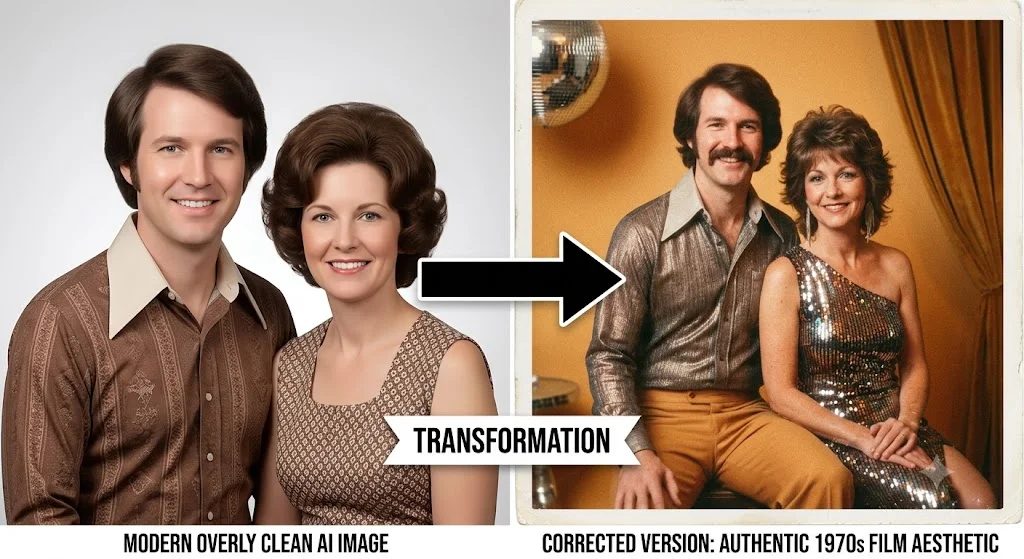
If your result looks too crisp and modern, use this follow-up: “The image looks too clean and digital. Apply heavier film grain, reduce the overall sharpness slightly, warm up the entire color palette with more yellow and orange tones, and add some fading to the highlights — it should look like a photograph taken on 35mm film in 1974.”
The second most common issue is clothing that isn’t quite 70s enough. The AI sometimes hedges toward generic retro rather than committing fully to the decade. If the outfits look vaguely vintage but not specifically 70s, follow up with: “Make the clothing much more specifically 1970s — bell bottoms should be very wide, collars should be large, patterns should be bold and era-accurate. Push the fashion further into the decade.”
What to Do With Your 70s Portrait
These images work in a slightly different way from the other styles in this series. Because they look so convincingly vintage, people often display them alongside actual old family photos — and they blend in seamlessly. Several people I know have printed their 70s AI portrait and put it in an old frame alongside real family photos from that era. Nobody can tell which one is real.
For the best vintage print effect, ask for the image to be printed with a slight sepia tone and on matte paper at services like Printique or Snapfish. Put it in a simple wooden or brass frame and it looks like a genuine family heirloom.
On Pinterest, the 70s aesthetic crosses over into an enormous number of interest categories — vintage fashion, retro home decor, boho style, festival fashion, road trip content, and nostalgia aesthetics. Tag your pins broadly and these images can reach an audience far larger than just the couple photography category.
The Decade That Never Really Ended
My wife is currently planning a 70s themed anniversary dinner. The AI portrait started all of it. She printed the Studio 54 version, framed it, and it’s been sitting on the mantelpiece ever since. Guests always ask about it. We always enjoy explaining.
The 70s keep coming back because something about that decade — the color, the confidence, the complete commitment to looking extraordinary — never fully goes out of style. And now you can step into it any time you want with nothing more than two photos and the right prompt.
Try all four and see which version of the decade feels most like you. I’d love to see your results — drop them in the comments and let the decade speak for itself.